
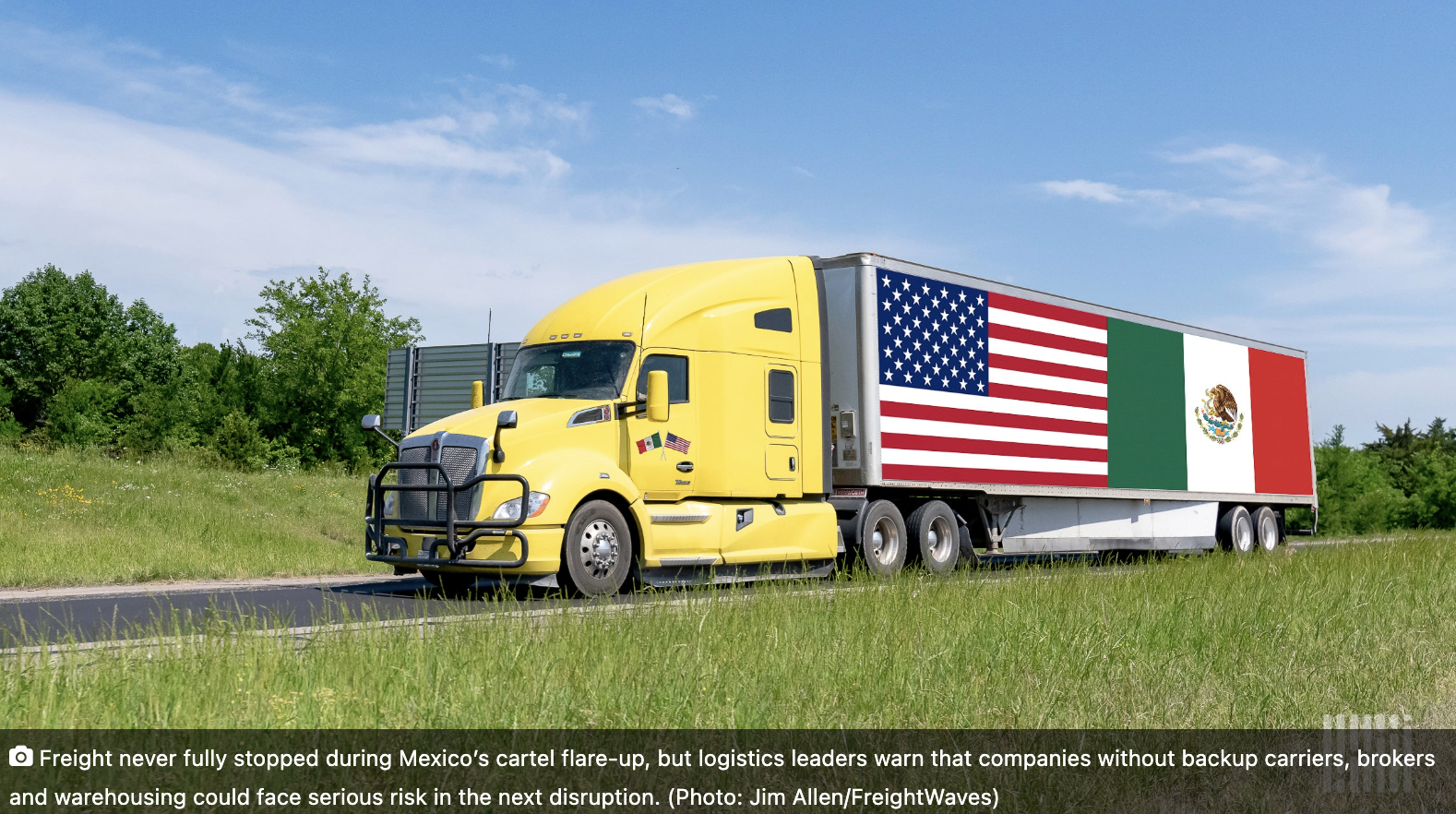
Freight flows across western Mexico are beginning to normalize after several days of cartel-related violence disrupted highways, ports and manufacturing operations tied to U.S.-Mexico trade.
A deadly military operation targeting the leadership of the Jalisco New Generation Cartel (CJNG) on Sunday triggered road blockades, temporary facility shutdowns and airport disruptions across parts of Jalisco, Michoacán and neighboring states. More than 70 people have reportedly died in the violence, including 25 National Guard members.
But as of Tuesday, major freight corridors were operating with “GO” status and no reported blockages, according to supply chain risk management platform Overhaul’s latest intelligence update.
Routes including MEX-15D between Morelia and Guadalajara, MEX-80D between Lagos de Moreno and Zapotlanejo, MEX-45D between Querétaro and Celaya, and the key MEX-200 corridor linking Cihuatlán and Manzanillo were all listed as open with free circulation.
“So far, there have been no reports of roadblocks or vehicle burnings related to the event linked to the CJNG criminal group,” Overhaul said in its Wednesday operational status report.
Echo Logistics: Disruption limited, but contingency planning critical.
Troy Ryley, president of Mexico at Echo Global Logistics, described the incident as intense but short-lived, with limited direct impact to cross-border freight.
“To this level, not countrywide,” Ryley said, noting that in his three decades operating in Mexico he has seen localized cartel-related disruptions, but rarely events that draw such widespread attention.
Echo Global Logistics is a Chicago-based third party logistics provider with cross-border facilities in Mexico City, Monterrey and Guadalajara, Mexico; along with a major site in Laredo, Texas.
Echo’s trucking operations did not materially slow, he said, aside from limited dialogue with two customers shipping into the Guadalajara region.
“Commerce in general was not affected at all,” Ryley said, emphasizing that major border crossings and core freight corridors continued moving during the height of the unrest.
However, he said that the episode highlights vulnerabilities for shippers relying on single carriers, ports or customs brokers without backup options.
Read more: FreightWaves
561-295-1777